
In today’s digital landscape, automation has become more than a luxury — it’s a necessity. With rising competition and the ever-increasing pace of online behavior, digital marketers are turning to automation tools to streamline workflows, optimize campaigns, scale outreach, and improve performance. Whether it’s email nurture sequences, social media scheduling, customer relationship management (CRM), or analytics reporting, automation tools help teams do more with less while maintaining consistency and quality.
In this article, we explore the top automation tools in digital marketing, why they matter, and how they can transform your marketing strategy from reactive to proactive.
1. What Is Marketing Automation?
Marketing automation refers to software that simplifies, automates, and measures marketing tasks and workflows. It helps companies target customers with automated messages across email, web, social, and text — without requiring manual effort every time.
At its core, marketing automation is about:
- Repetitive task elimination
- Personalizing communication at scale
- Tracking and optimizing performance
Today, automation touches nearly every part of digital marketing — from customer acquisition and lead nurturing to reporting and analytics.
2. Why Automation Is Essential for Digital Marketing Success
Before diving into the tools themselves, it’s important to understand why automation is so valuable:
- Saves Time: Teams don’t have to manually execute tasks they do daily — emails, social posts, and lead follow-ups can run automatically.
- Improves Accuracy: Automation eliminates human error and ensures consistent messaging.
- Increases Efficiency: Teams can focus on strategy, creativity, and optimization rather than repetitive tasks.
- Enables Personalization: Modern automation platforms allow marketers to tailor messages based on user behavior and data.
- Provides Analytics & Insights: Automated tracking means better data, better decisions, and real-time performance insights.
In an era where customers expect fast, relevant communication, automation is no longer optional — it’s expected.
3. HubSpot — The All-Around Marketing Automation Powerhouse
What It Is
HubSpot is a leading inbound marketing and sales automation platform that combines marketing automation, CRM, content management, and analytics in one robust ecosystem.
Key Features
- Email automation and workflows
- Lead scoring and segmentation
- Landing page and form builders
- CRM integration
- Social media scheduling
- Analytics dashboards
Why It’s Great
HubSpot is especially useful for businesses that want a centralized platform for managing all aspects of digital marketing. Its workflows allow you to automate entire funnels — from initial lead capture to customer retention campaigns — without coding knowledge.
Best For
Mid-sized and enterprise businesses, inbound marketing teams, and organizations seeking an all-in-one solution.
4. Mailchimp — Email Marketing and Beyond
What It Is
Mailchimp started as an email marketing tool but has since grown into a broader marketing automation platform.
Key Features
- Email campaign automation
- Audience segmentation
- A/B testing
- Landing pages
- Postcards and print marketing tools
- Basic CRM capabilities
Why It’s Great
Mailchimp is user-friendly and ideal for small businesses and beginners. Its automated email sequences — like welcome series, abandoned cart reminders, and birthday emails — help marketers nurture leads without constant oversight.
Best For
Small businesses, ecommerce stores, startups, and newsletter-focused marketing teams.
5. ActiveCampaign — Powerful Automation and CRM
What It Is
ActiveCampaign is a platform that combines email marketing automation with advanced CRM tools, giving marketers sending power and deep customer insight.
Key Features
- Sophisticated automation workflows
- Event tracking
- Lead scoring
- Sales automation
- CRM integration
- Messaging and SMS automation
Why It’s Great
Its automation builder is one of the most intuitive and visual in the market. You can create complex sequences that respond to user behavior — like site visits, purchase history, or engagement triggers — without developers.
Best For
Growing businesses that need both marketing automation and sales automation in one place.
6. Zapier — Connect Everything Together
What It Is
Zapier isn’t strictly a marketing tool — it’s an integration automation platform that connects apps and automates workflows between them.
Key Features
- App integrations (over 5,000)
- Triggers + actions (called “Zaps”)
- Conditional logic and multi-step automation
- No coding required
Why It’s Great
Zapier lets marketers automate data movement between platforms — like syncing form submissions into a CRM, triggering Slack alerts for new leads, or automating spreadsheets from email data.
Best For
Marketing teams that use many separate tools and want them to work together seamlessly.
7. Buffer & Hootsuite — Social Media Scheduling Automation
What They Are
Buffer and Hootsuite are popular social media management platforms that automate posting, analytics, and social engagement workflows.
Key Features
- Post scheduling
- Social listening and monitoring
- Analytics and reporting
- Multi-platform support (Facebook, Instagram, Twitter, LinkedIn, Pinterest)
- Team collaboration features
Why They’re Great
With social media algorithms constantly changing, the ability to plan and automate content helps teams maintain consistency and free up time for community engagement.
Best For
Social media teams and content schedulers.
8. SEMrush — SEO Automation and Insights
What It Is
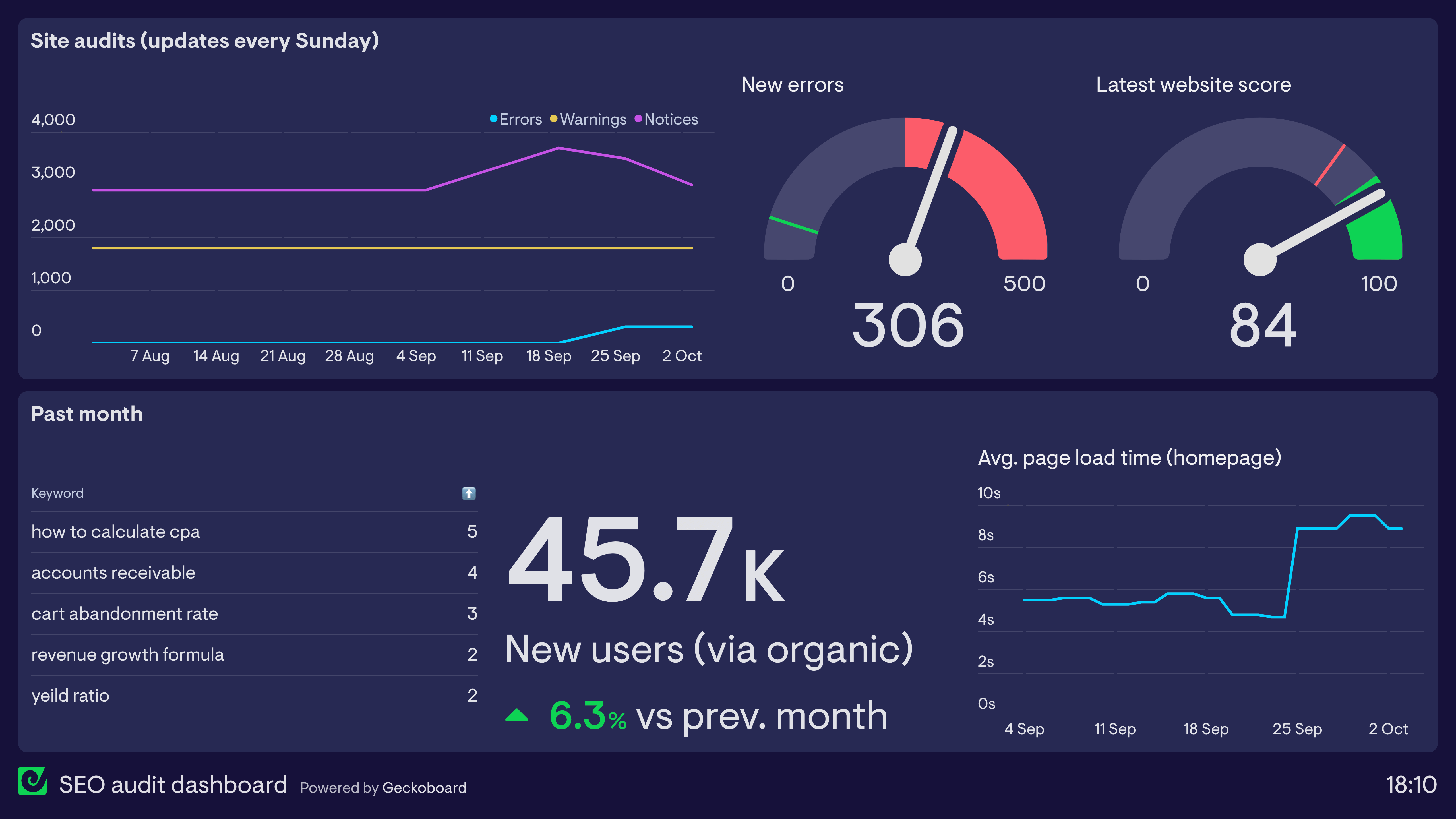
SEMrush is a comprehensive SEO tool that automates keyword research, site auditing, rank tracking, competitor analysis, and content optimization.
Key Features
- Automated site audits
- Keyword gap analysis
- Backlink tracking
- SEO recommendations
- Content templates and optimization tips
Why It’s Great
SEMrush helps researchers and SEO teams save hours of manual analysis. It flags issues automatically and provides actionable insights that can drive ranking improvements.
Best For
SEO professionals and content marketers focused on organic search.
9. Google Analytics + GA4 — Tracking and Reporting Automation
What It Is
Google Analytics (especially GA4) isn’t a marketing automation tool in the traditional sense, but it automates data collection, tracking, and reporting — giving marketers deep insight into performance trends.
Key Features
- Event tracking
- Conversion measurement
- Audience segmentation
- Automated reports and dashboards
- Funnel analysis
Why It’s Great
Automated analytics lets you understand what’s working — and what’s not — without exporting or manually crunching data. That insight fuels better decision-making across every channel.
Best For
All marketers focused on performance measurement.
10. Calendly — Automating Meeting Scheduling
What It Is
Calendly automates appointment booking by syncing with your calendar so prospects can self-schedule without back-and-forth emails.
Key Features
- Calendar integrations (Google, Outlook, Office 365)
- Time zone detection
- Custom availability rules
- SMS and email reminders
Why It’s Great
For sales and consulting teams, scheduling can be a huge time suck. Calendly removes that bottleneck and creates a seamless booking experience.
Best For
Sales teams, consultants, agencies, and client-facing industries.
11. Drift & Intercom — Conversational Marketing Automation
What They Are
Drift and Intercom are conversational marketing platforms that automate live chat, chatbot flows, and lead qualification.
Key Features
- AI chatbots
- Targeted messaging
- Lead routing to sales reps
- Integration with CRM
- Automated follow-up messaging
Why They’re Great
These platforms help teams engage visitors in real-time without manual effort. For example, a chatbot can ask qualifying questions, capture lead details, and route warm leads to reps automatically.
Best For
B2B companies, SaaS businesses, high-traffic websites that want real-time engagement.
12. Marketo — Enterprise-Level Marketing Automation
What It Is
Marketo, part of Adobe, is a high-end marketing automation platform designed for large, complex organizations.
Key Features
- Multi-channel campaign automation
- Lead scoring and lifecycle management
- Account-based marketing (ABM)
- Revenue attribution
- Advanced analytics
Why It’s Great
Marketo handles sophisticated workflows and integrates tightly with enterprise sales stacks. It’s built for scale and handles the complexity many large companies face.
Best For
Enterprise marketing operations and large marketing teams.
13. AI Content Tools — Jasper, Copy.ai, Writesonic
What They Are
AI writing tools such as Jasper, Copy.ai, and Writesonic help marketers automate content creation — from blog drafts and social captions to product descriptions and ad copy.
Key Features
- Content generation
- SEO optimization suggestions
- Templates for different content types
- Integration with SEO tools
Why They’re Great
These tools reduce the time spent brainstorming and writing. While human editing remains essential, AI tools accelerate ideation and initial drafts.
Best For
Content marketers, SEO writers, social media teams.
14. Best Practices for Using Automation Tools Successfully
Having great tools isn’t enough — you need the right strategy:
Automate only what makes sense
Not every task should be automated. Focus on repetitive, predictable processes.
Segment your audience
The more targeted your automation, the better the results.
Test and optimize
Automation should be monitored and refined over time — don’t set it and forget it.
Ensure data cleanliness
Bad data leads to bad outcomes. Regularly clean and update your lists, tags, and CRM entries.
Align with goals
Every automated workflow should tie back to a measurable KPI — like conversions, engagement, or revenue.
15. Final Thoughts
Automation tools are transforming digital marketing by saving time, improving results, and giving teams the bandwidth for strategic thinking. From CRM and email sequences to social scheduling and SEO analysis, the tools above represent the most impactful automation solutions available today.
However, automation is not a replacement for strategy. The real power comes when tools are paired with strong messaging, audience insights, and continuous optimization. Armed with the right tools and purposeful execution, marketers can scale efficiency, increase reach, and ultimately drive growth in a highly competitive digital environment.
If you’d like, I can also:
✅ Format this for WordPress (with SEO title + meta description)
✅ Add internal linking suggestions
✅ Create visuals or table summaries
Just let me know!
Yes i wnat it formatted for wordpress
Perfect — below is a WordPress-ready, SEO-optimized version of your article. You can paste this directly into the WordPress block editor and it will map cleanly to headings, paragraphs, and SEO fields.
🔍 SEO SETTINGS (Use in Yoast / Rank Math)
SEO Title:
Best Automation Tools in Digital Marketing (2026 Guide)
Meta Description:
Discover the best automation tools in digital marketing today. Learn how top platforms improve SEO, email marketing, social media, analytics, and lead generation.
Focus Keyword:
Digital marketing automation tools
Best Automation Tools in Digital Marketing Today
Digital marketing has evolved rapidly over the last decade, and automation has become one of the most powerful drivers of growth. As businesses compete for attention across search engines, social media platforms, email inboxes, and websites, marketers are increasingly relying on automation tools to streamline workflows, improve efficiency, and scale their efforts.
Marketing automation tools allow businesses to execute campaigns faster, personalize messaging at scale, and track performance with minimal manual effort. From content creation and SEO optimization to customer engagement and analytics, automation is now embedded in nearly every successful digital marketing strategy.
This article explores the best automation tools in digital marketing today, how they work, and why they matter for modern marketers.
What Is Marketing Automation?
Marketing automation refers to the use of software platforms and technologies to automate repetitive marketing tasks. These tools help businesses manage campaigns, nurture leads, analyze performance, and communicate with audiences more efficiently.
Common areas where automation is used include:
- Email marketing and follow-ups
- Lead generation and nurturing
- Social media scheduling
- SEO analysis and reporting
- Customer relationship management (CRM)
- Analytics and performance tracking
Instead of manually executing each task, automation allows marketers to design workflows that run continuously in the background.
Why Automation Is Essential in Digital Marketing
Automation is no longer optional for competitive digital marketing teams. The benefits go far beyond saving time.
Increased Efficiency
Automation eliminates repetitive tasks, allowing marketers to focus on strategy, creativity, and optimization.
Improved Personalization
Modern tools use user behavior, preferences, and data to deliver personalized content at scale.
Better Accuracy
Automated systems reduce human error and ensure consistent execution across campaigns.
Actionable Insights
Automation tools track performance automatically, providing real-time insights and analytics.
HubSpot: All-in-One Marketing Automation Platform
HubSpot is one of the most comprehensive marketing automation platforms available today. It combines CRM, content management, email marketing, analytics, and automation tools into a single ecosystem.
Key Features
- Automated email workflows
- Lead scoring and segmentation
- Landing pages and forms
- CRM integration
- Marketing analytics dashboards
Why HubSpot Stands Out
HubSpot is ideal for businesses that want an all-in-one solution. Its visual workflow builder makes it easy to automate entire customer journeys, from first website visit to long-term retention.
Best for: Medium to large businesses and inbound marketing teams.
Mailchimp: Email Marketing Automation Made Simple
Mailchimp began as an email marketing tool and has expanded into a broader automation platform suitable for small businesses.
Key Features
- Email automation and drip campaigns
- Audience segmentation
- A/B testing
- Landing page creation
- Basic CRM functionality
Why Marketers Use Mailchimp
Mailchimp is beginner-friendly and cost-effective. It is especially useful for automated welcome sequences, newsletters, and abandoned cart emails.
Best for: Small businesses, startups, and ecommerce brands.
ActiveCampaign: Advanced Automation and CRM
ActiveCampaign offers powerful automation combined with customer relationship management tools.
Key Features
- Visual automation builder
- Behavioral tracking
- Lead scoring
- Sales automation
- Email and SMS marketing
Why It’s Powerful
ActiveCampaign allows marketers to build complex workflows triggered by user behavior, making campaigns more responsive and personalized.
Best for: Growing businesses that need advanced automation without enterprise-level complexity.
Zapier: Connecting Your Marketing Tools
Zapier is an automation connector that links thousands of apps together without coding.
Key Features
- App-to-app integrations
- Multi-step automation workflows
- Conditional logic
- No-code setup
Why Zapier Matters
Zapier automates data flow between platforms, such as sending leads from forms into CRMs or updating spreadsheets automatically.
Best for: Marketing teams using multiple tools that need seamless integration.
Buffer and Hootsuite: Social Media Automation
Social media scheduling tools like Buffer and Hootsuite help marketers maintain consistency across platforms.
Key Features
- Automated post scheduling
- Analytics and performance reports
- Multi-platform support
- Team collaboration tools
Why Social Automation Is Important
Scheduling content in advance ensures consistent posting while freeing time for community engagement and strategy.
Best for: Social media managers and content teams.
SEMrush: SEO Automation and Optimization
SEMrush is a leading SEO and digital marketing analytics tool that automates research and reporting.
Key Features
- Keyword research and tracking
- Automated site audits
- Backlink analysis
- Competitor insights
- SEO content optimization
Why SEO Automation Matters
SEMrush helps marketers identify issues, opportunities, and ranking improvements without manual analysis.
Best for: SEO professionals and content marketers.
Google Analytics (GA4): Automated Marketing Insights
Google Analytics automatically tracks user behavior, conversions, and performance metrics.
Key Features
- Event tracking
- Conversion measurement
- Audience segmentation
- Automated reporting
Why It’s Essential
Analytics automation allows marketers to understand what’s working and optimize campaigns based on real data.
Best for: All digital marketers.
Calendly: Automating Scheduling and Lead Conversion
Calendly simplifies appointment booking by allowing prospects to self-schedule meetings.
Key Features
- Calendar integrations
- Automated reminders
- Time zone detection
- Custom availability
Why It’s Effective
Automating scheduling removes friction from the sales process and improves conversion rates.
Best for: Consultants, agencies, and sales teams.
Drift and Intercom: Conversational Marketing Automation
These platforms automate customer communication through chatbots and live messaging.
Key Features
- AI-powered chatbots
- Lead qualification
- CRM integration
- Automated follow-ups
Why Conversational Automation Works
Chatbots engage visitors instantly, capture leads, and route qualified prospects without manual intervention.
Best for: B2B companies and SaaS platforms.
Marketo: Enterprise Marketing Automation
Marketo, part of Adobe, is designed for large organizations with complex marketing needs.
Key Features
- Multi-channel automation
- Account-based marketing (ABM)
- Advanced analytics
- Revenue attribution
Why Enterprises Choose Marketo
It supports sophisticated workflows and integrates deeply with enterprise sales systems.
Best for: Large organizations and enterprise marketing teams.
AI Content Automation Tools
AI writing tools such as Jasper, Copy.ai, and Writesonic help automate content creation.
Key Features
- Blog and copy generation
- SEO optimization suggestions
- Content templates
- Faster ideation
Why AI Tools Are Growing
They significantly reduce content production time while supporting SEO strategies.
Best for: Content marketers and SEO writers.
Best Practices for Using Marketing Automation Tools
- Automate repetitive tasks only
- Segment audiences for better personalization
- Continuously test and optimize workflows
- Maintain clean and accurate data
- Align automation with clear KPIs
Final Thoughts
Marketing automation tools have reshaped digital marketing by enabling scalability, consistency, and data-driven decision-making. When used strategically, these tools empower marketers to increase efficiency, improve engagement, and drive measurable growth.
Automation does not replace creativity or strategy — it enhances them. By combining the right tools with clear goals and thoughtful execution, businesses can thrive in today’s competitive digital environment.
Leave a Reply